The unseen role your network plays in every moment of protection
A well-crafted home is built on confidence. Every detail, from lighting to security, is expected to perform with quiet consistency. Surveillance plays a central role in that experience, offering awareness and control at a glance. Yet, when performance begins to waver, the issue is rarely as visible as the cameras themselves.
Behind every clear image and timely alert sits a network responsible for carrying and preserving that data. Understanding this connection brings clarity to issues that might otherwise feel unpredictable. Continue reading to explore how network strength shapes the performance of modern surveillance.
SEE ALSO: The Secret Behind Homes That Always Work Beautifully
Inconsistent Video Feeds and Missed Footage
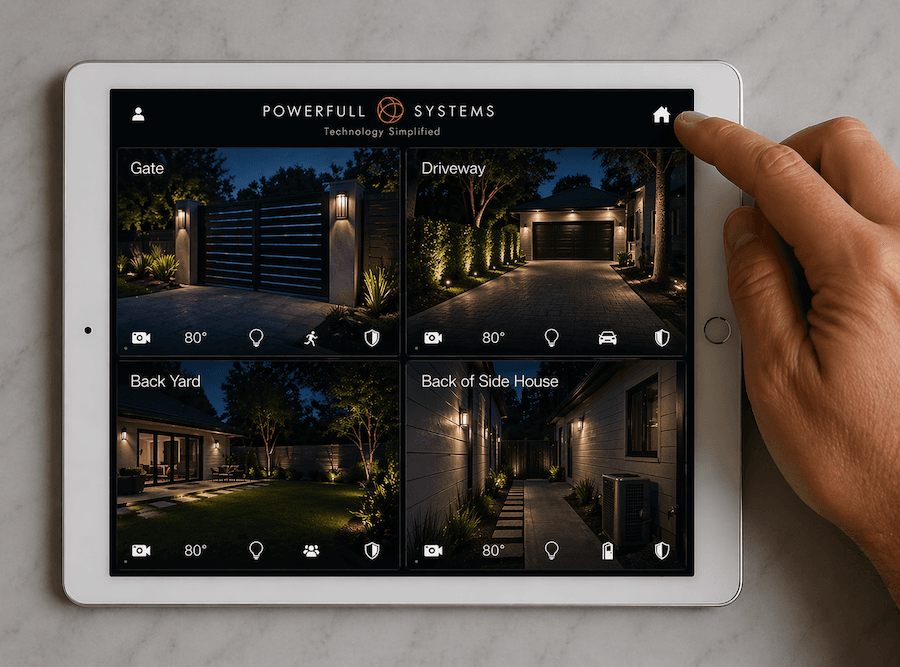
A surveillance system is expected to capture every moment with clarity and continuity. When video feeds begin to stutter or recordings show unexpected gaps, the experience quickly loses its sense of reliability. These interruptions often trace back to how data moves across the network supporting each camera.
Every frame of footage depends on steady bandwidth and a consistent connection. When either fluctuates, cameras may struggle to maintain a stable stream, leading to buffering, temporary dropouts, or incomplete recordings. Over time, these small disruptions can create blind spots in what should be a comprehensive view of the home. A strong network infrastructure maintains the steady flow required for uninterrupted monitoring, preserving visibility and confidence.

Delayed Alerts and Unreliable Remote Access
A modern surveillance system is designed to keep homeowners connected, even from a distance. The expectation is simple: when activity occurs, notifications arrive promptly, and live footage is readily available. When that connection feels delayed or inconsistent, the experience becomes less intuitive and far less reassuring.
Timely alerts depend on how efficiently data travels from the home to a mobile device. Network congestion or limited upload capacity can slow that process, creating noticeable delays. The same conditions can affect remote access, where live views may take longer to load or respond. A well-structured network supports immediate communication between devices, delivering updates and access in a way that feels fluid and dependable, no matter where you may be.
Poor Video Quality and Storage Issues
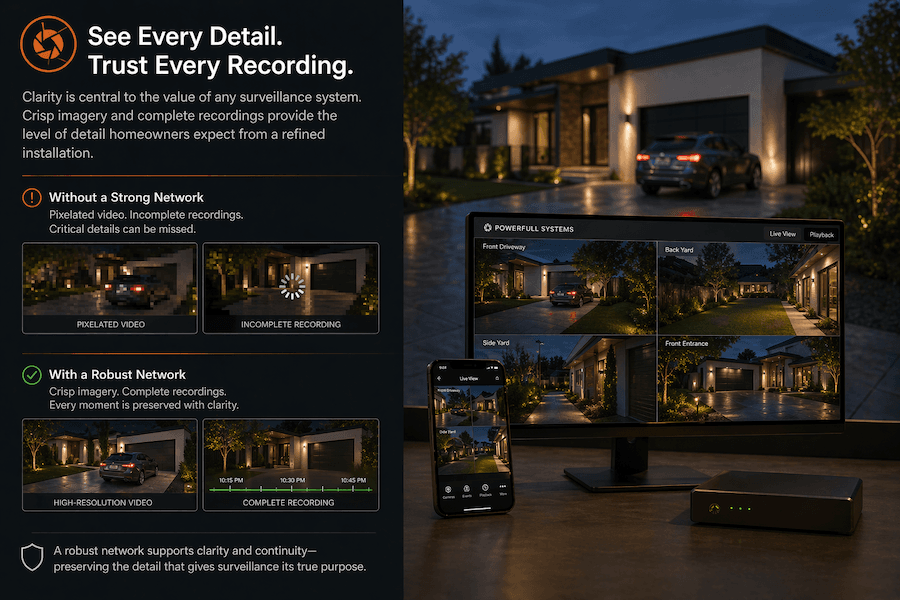
Clarity is central to the value of any surveillance system. Crisp imagery and complete recordings provide the level of detail homeowners expect from a refined installation. When video appears pixelated or recordings feel incomplete, the issue often lies within the network’s capacity to support high-resolution data.
Modern cameras capture significant amounts of information, especially when configured for detailed imaging. Without sufficient bandwidth and stability, that data may be compressed or inconsistently transmitted, affecting overall quality. Storage performance is also tied to network reliability, as interruptions can disrupt how footage is written and preserved. A robust network supports both clarity and continuity, maintaining the integrity of each recording while preserving the visual detail that gives surveillance its true purpose.
Elevate Your Home’s Security Experience
Surveillance performs at its best when supported by a network designed with intention and care. A system that operates with consistency brings a sense of ease to daily life, where every alert, recording, and live view responds as expected.
If you seek a higher standard of performance, professional design makes all the difference. Connect with Powerfull Systems to explore how a refined networking foundation can support a more dependable and intuitive security experience in your home.